The Split Cart
Walmart
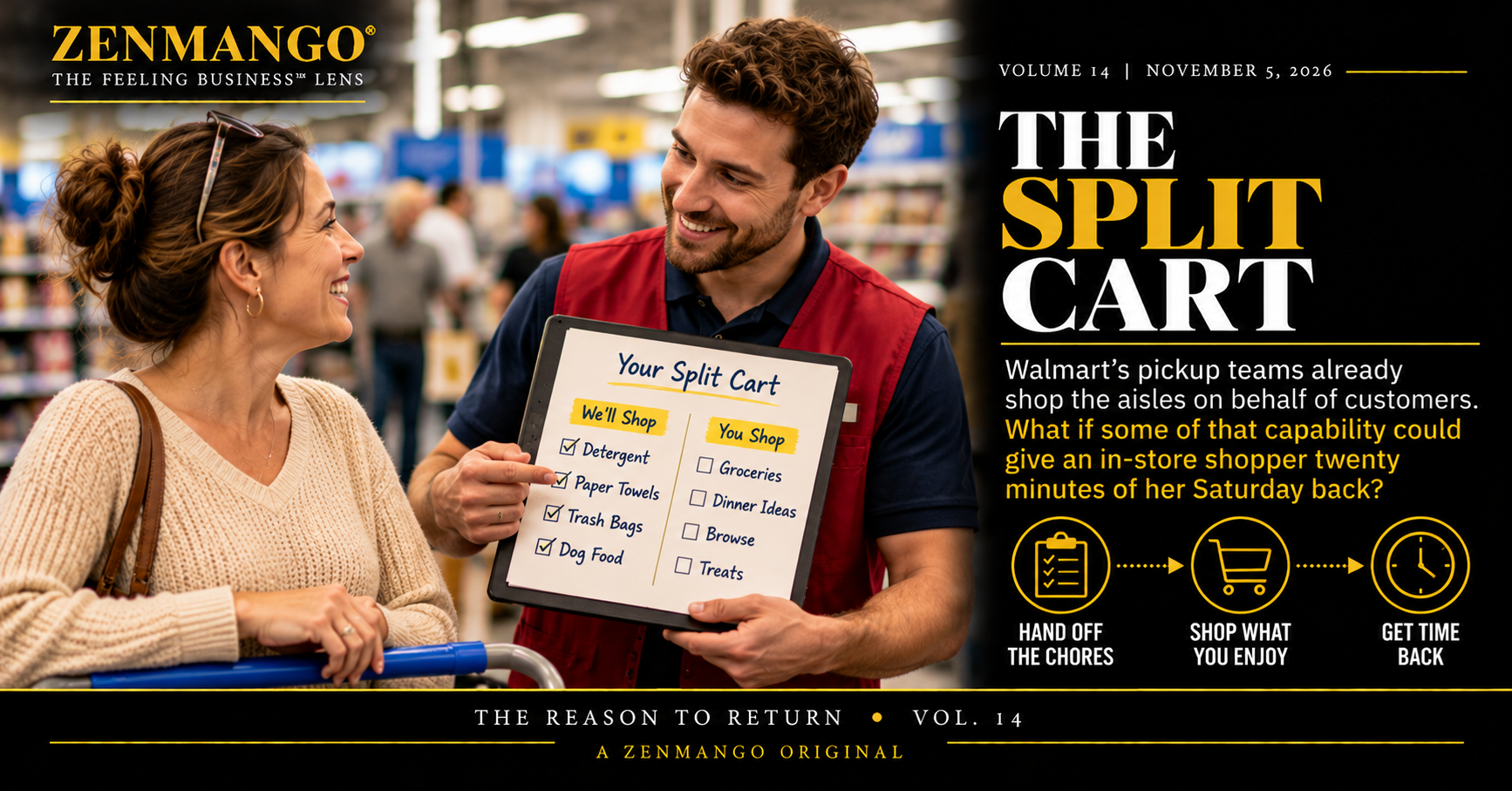
A weekly shopper enters with a list that has two halves. One half is groceries, dinner ideas and the browsing she still enjoys. The other is detergent, paper towels, trash bags and dog food. She walks every aisle for both, and the chore half is slowly teaching her that staying home may be easier. Things she can shop from home, she can source from anywhere else.
Walmart has built a large pickup operation with people who know the aisles well. The opportunity I see is that this capability passes beside in-store customers still carrying the most tedious parts of their own lists.
At the entrance, give the greeter a new role. "Give me the boring half of your list. Go enjoy the rest of the store. We will meet you at checkout." A trained picker handles the chores while she keeps the part of shopping she actually wants. Both halves meet at the register.
The feeling is freedom. Somebody separated what she has to do from what she likes to do and gave part of her Saturday back. She may put more in her cart with her free time.
The idea could keep more of the basket in the store without asking the customer to walk every aisle. Walmart's scale, which can sometimes feel like work to the shopper, is also what makes the service possible.
People ask what a Walmart greeter does because the role is visible but its value is not always obvious. The Split Cart gives the front door a job customers would understand immediately.
Walmart transformed convenience through pickup by teaching teams to shop the store professionally. The Split Cart brings that operational strength back inside for the customer who still wants to visit.
Scale becomes customer experience when the business uses its size to remove work instead of adding it.
Which half of your customer's experience is a chore, and could your team carry it for them?
Send this to the leader responsible for customer experience. Identify one chore customers still do only because your process assumes they have to do it themselves.
Taking Brands Beyond® Starts Within
The Reason to Return is how ZenMango practises Step Zero in public: find the moment the business never looked at, then make it the reason people come back.